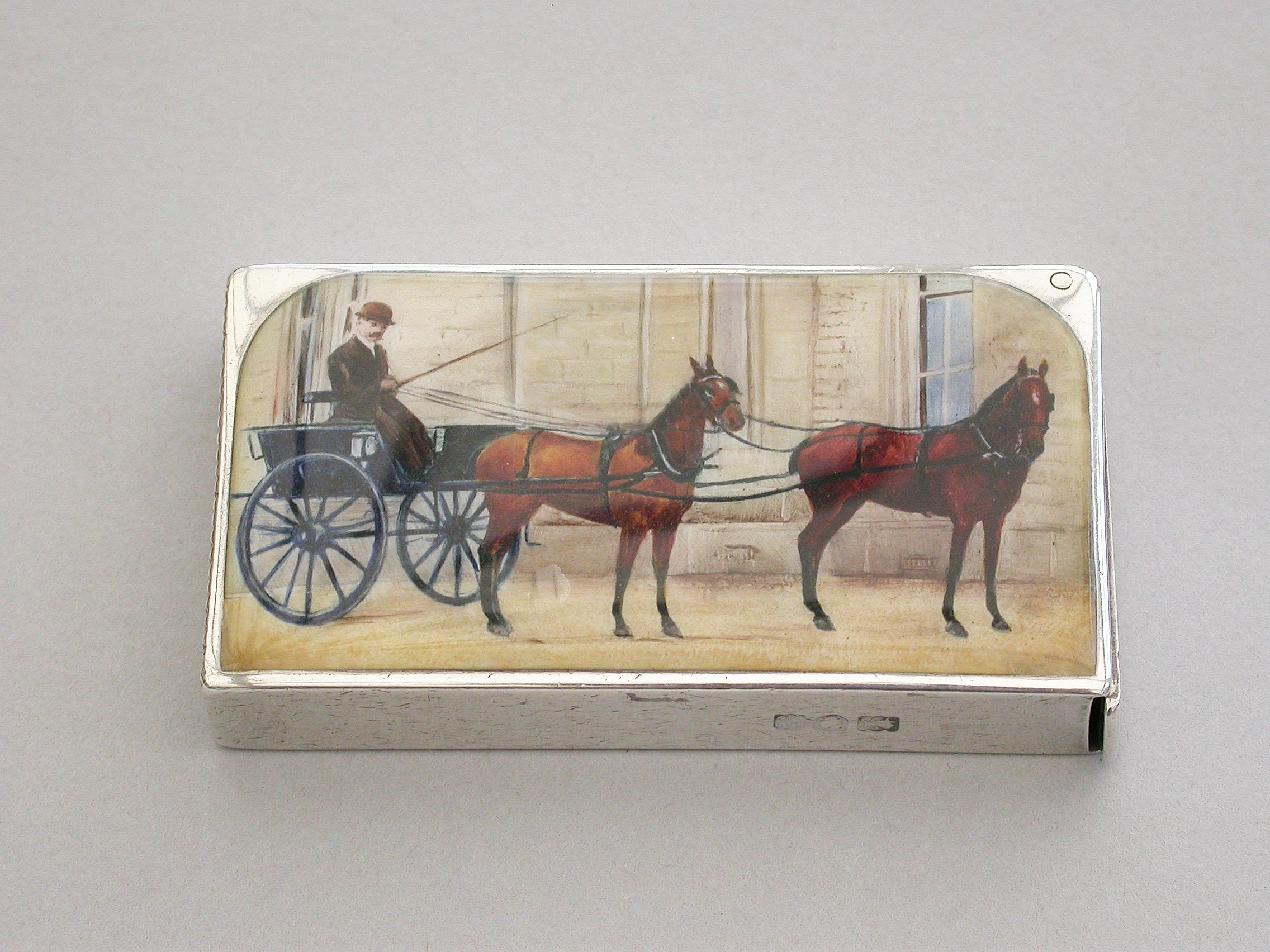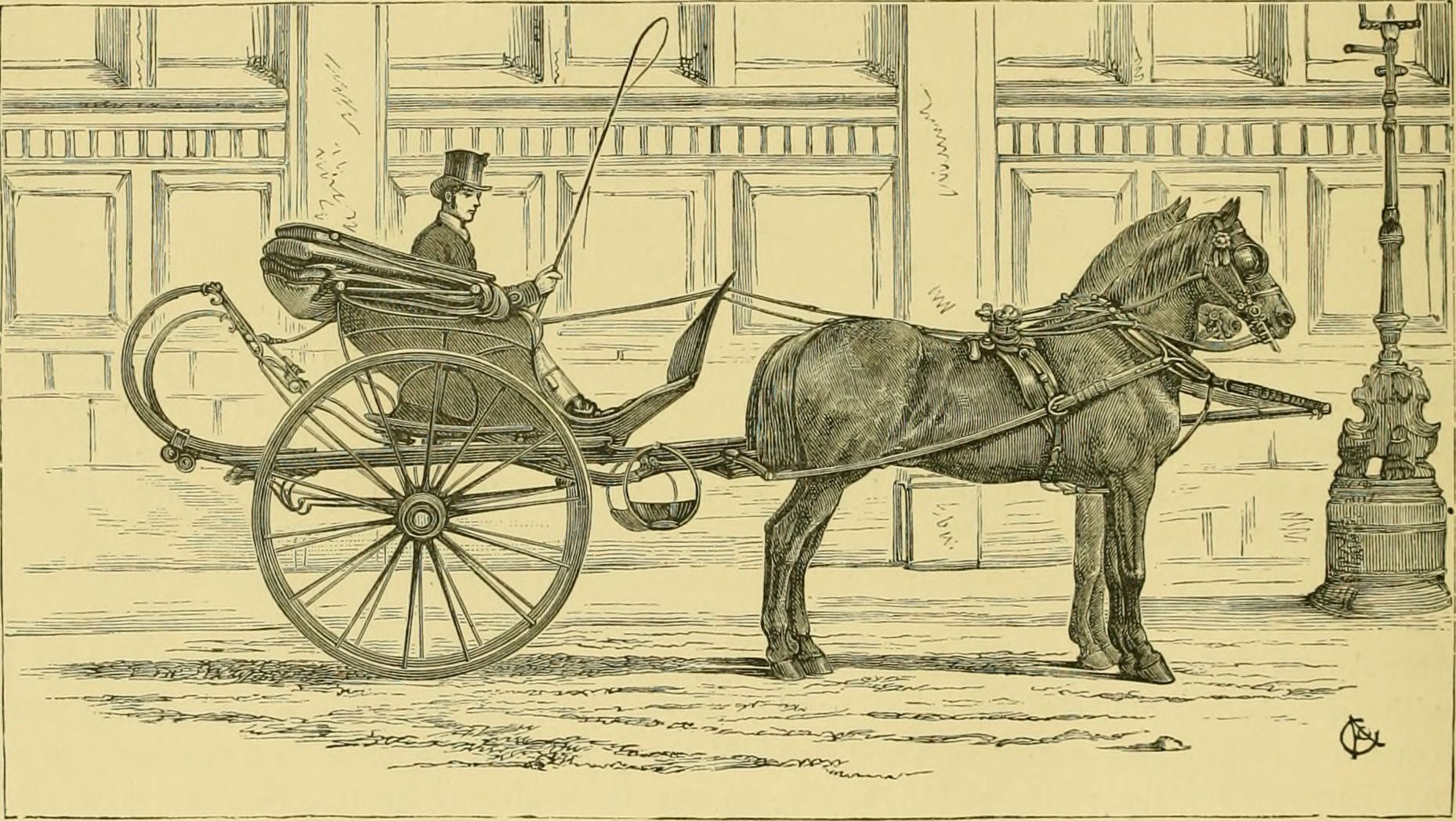

Victorian Silver & Enamel Curricle Vesta Case
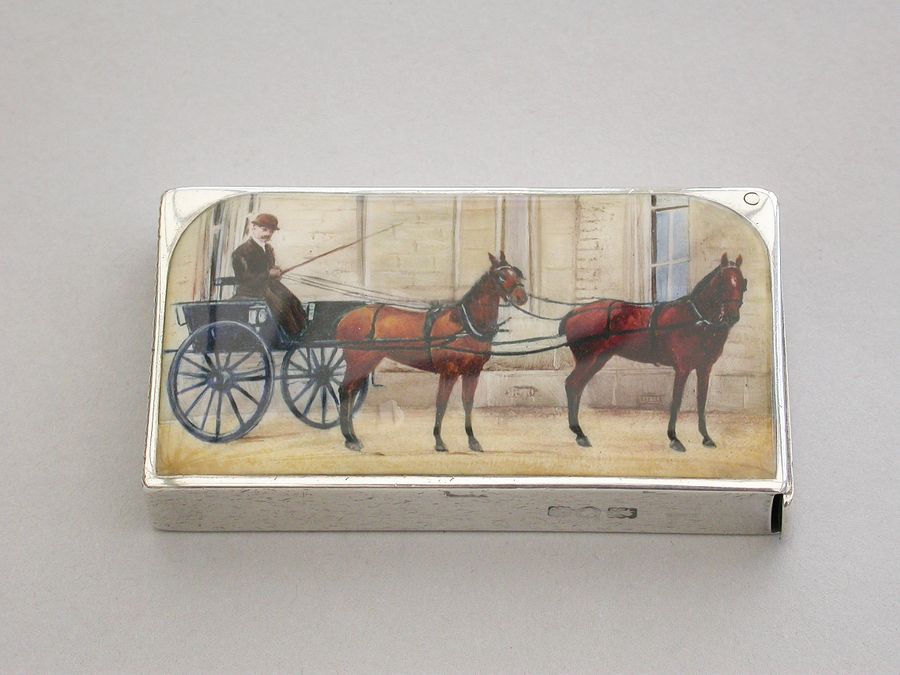
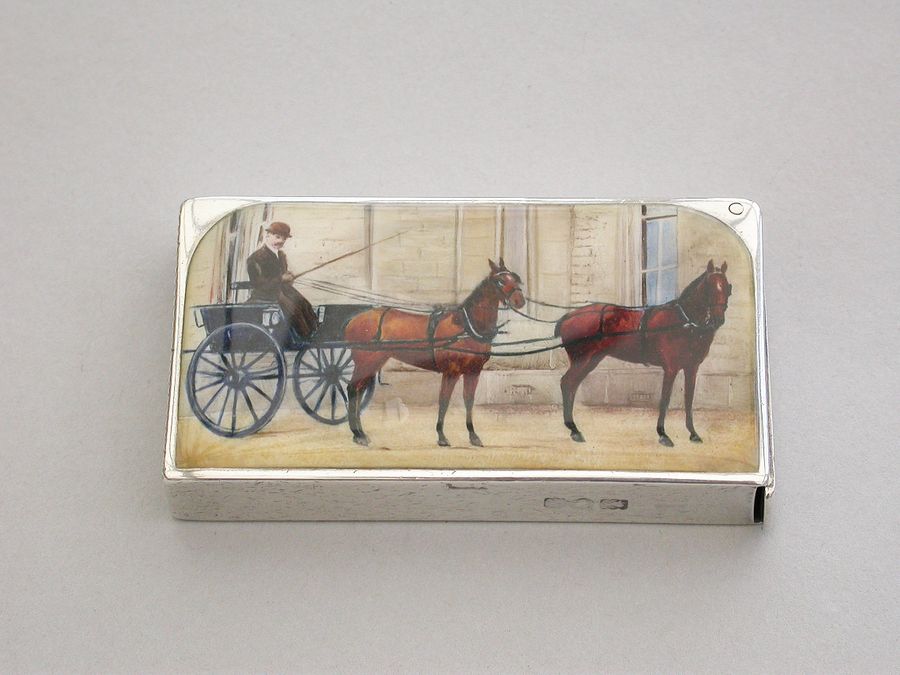
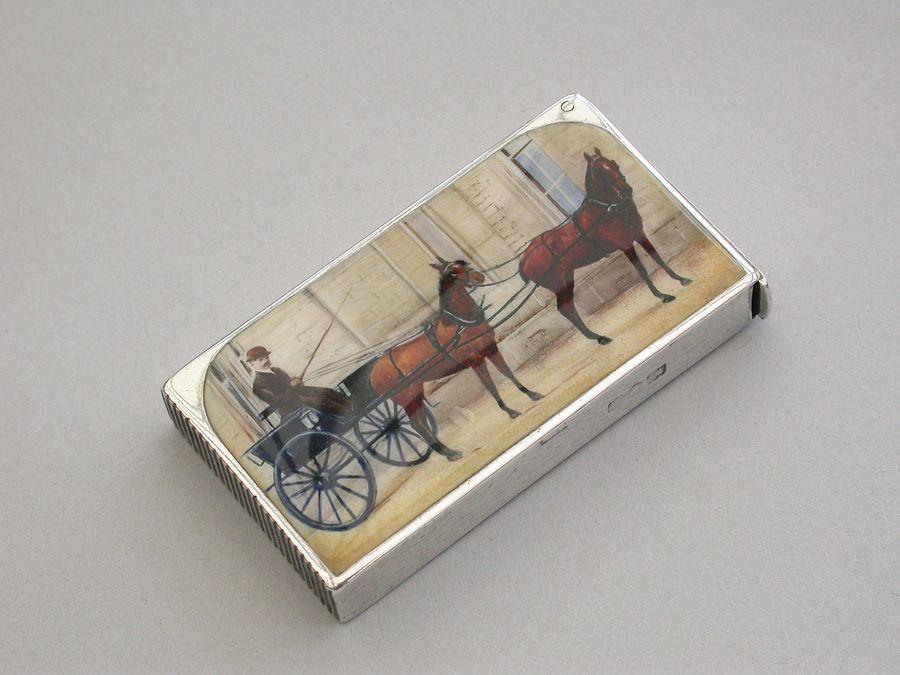
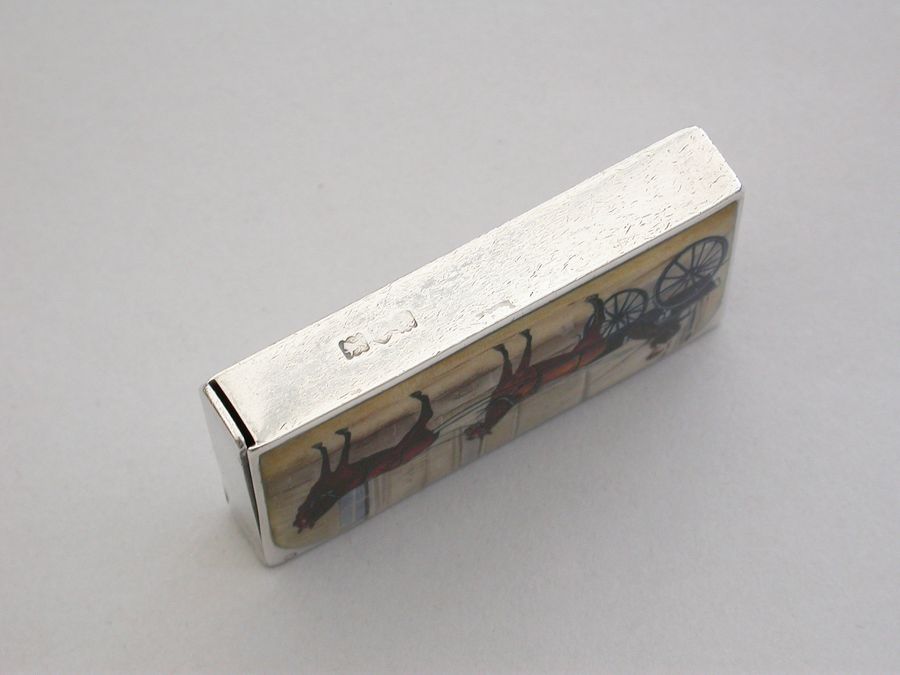
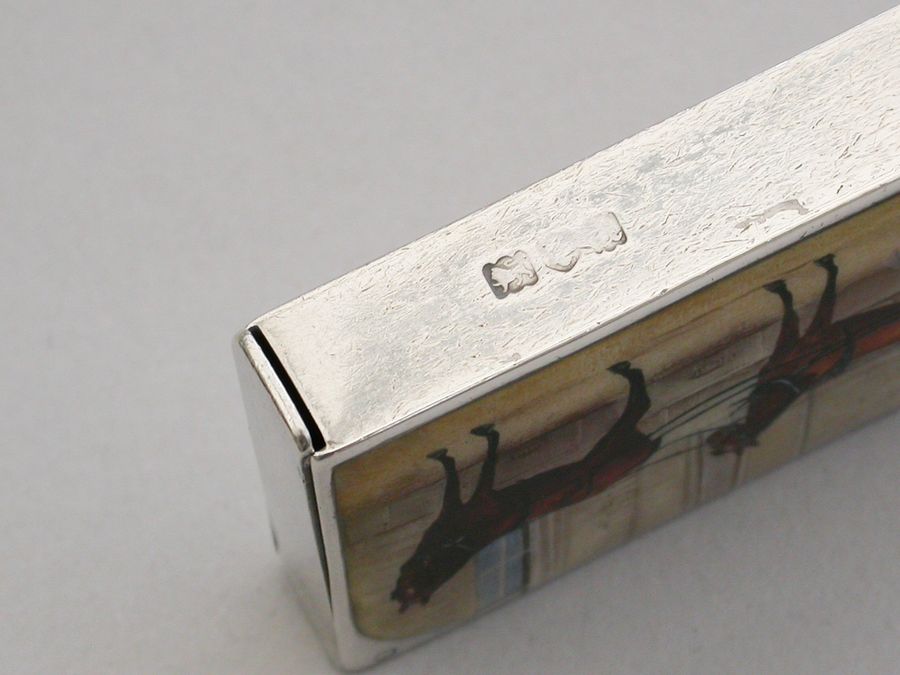
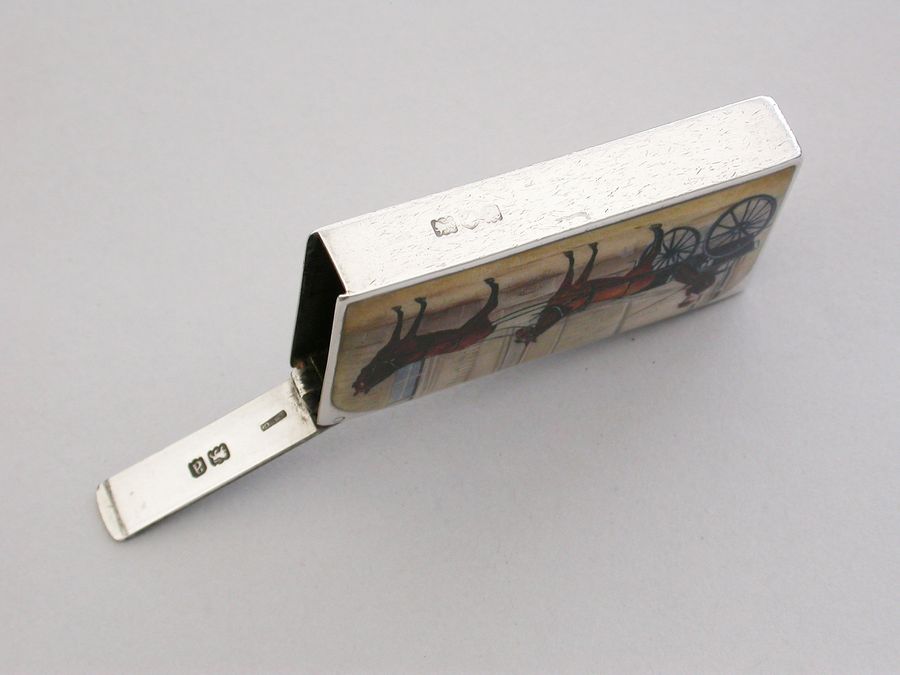
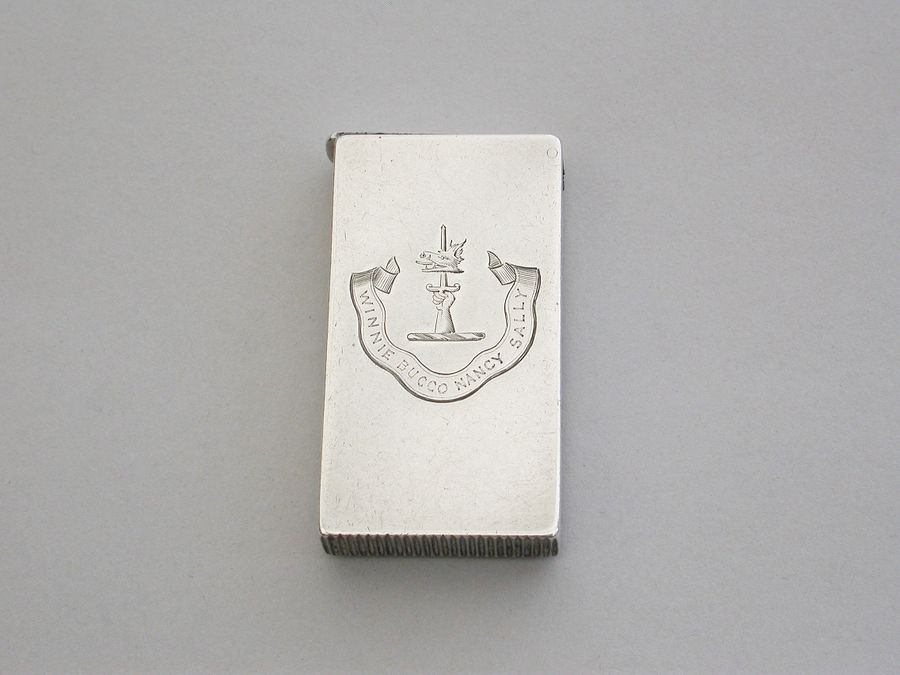
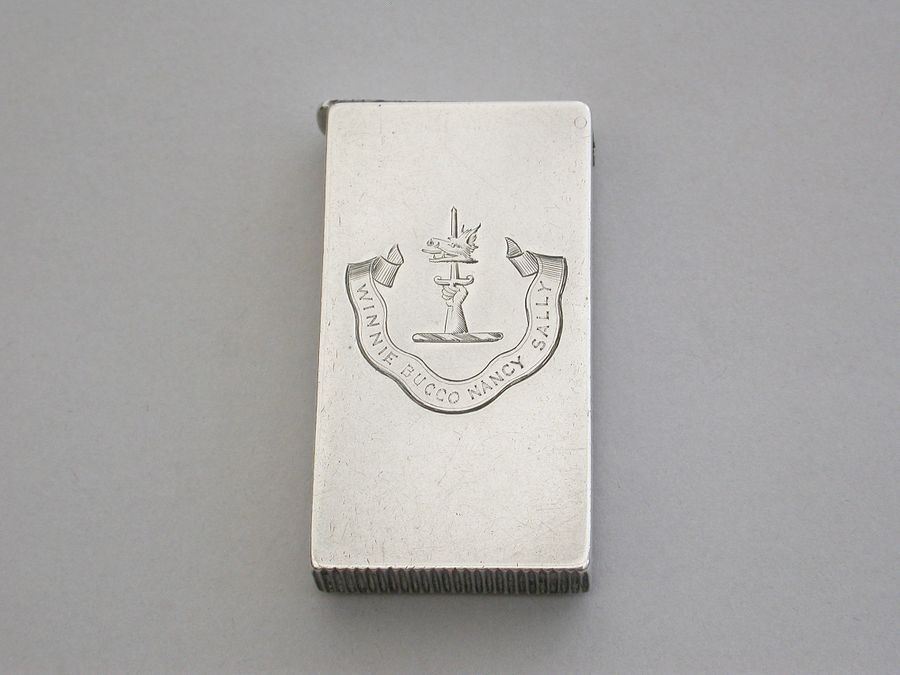
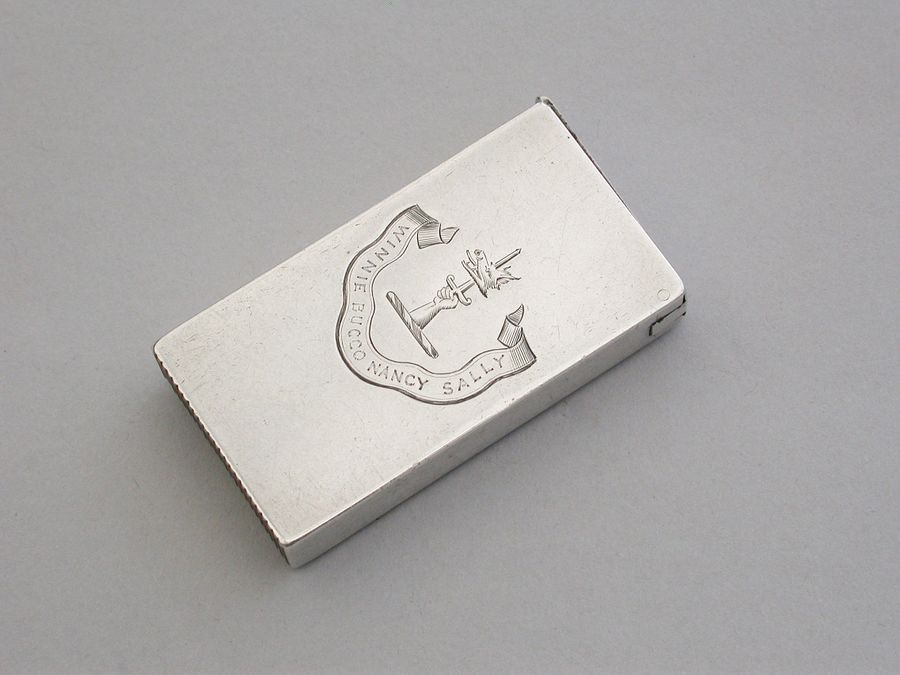
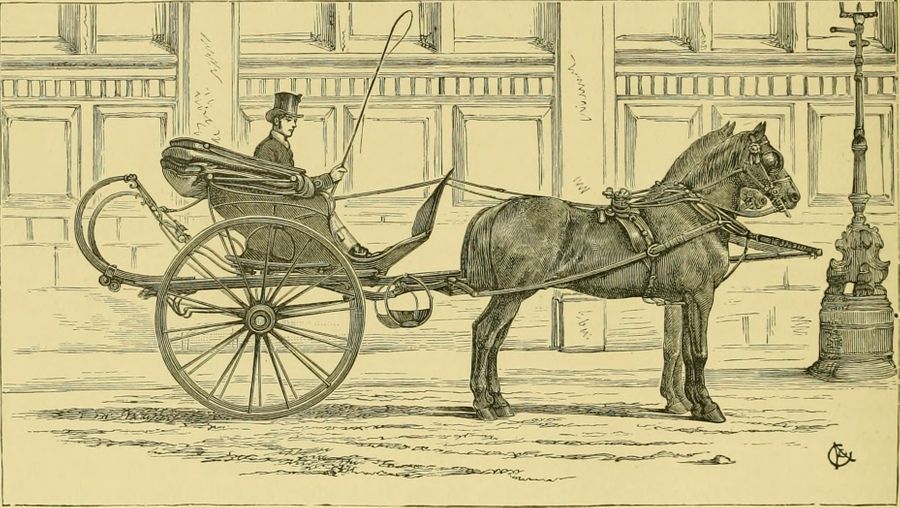
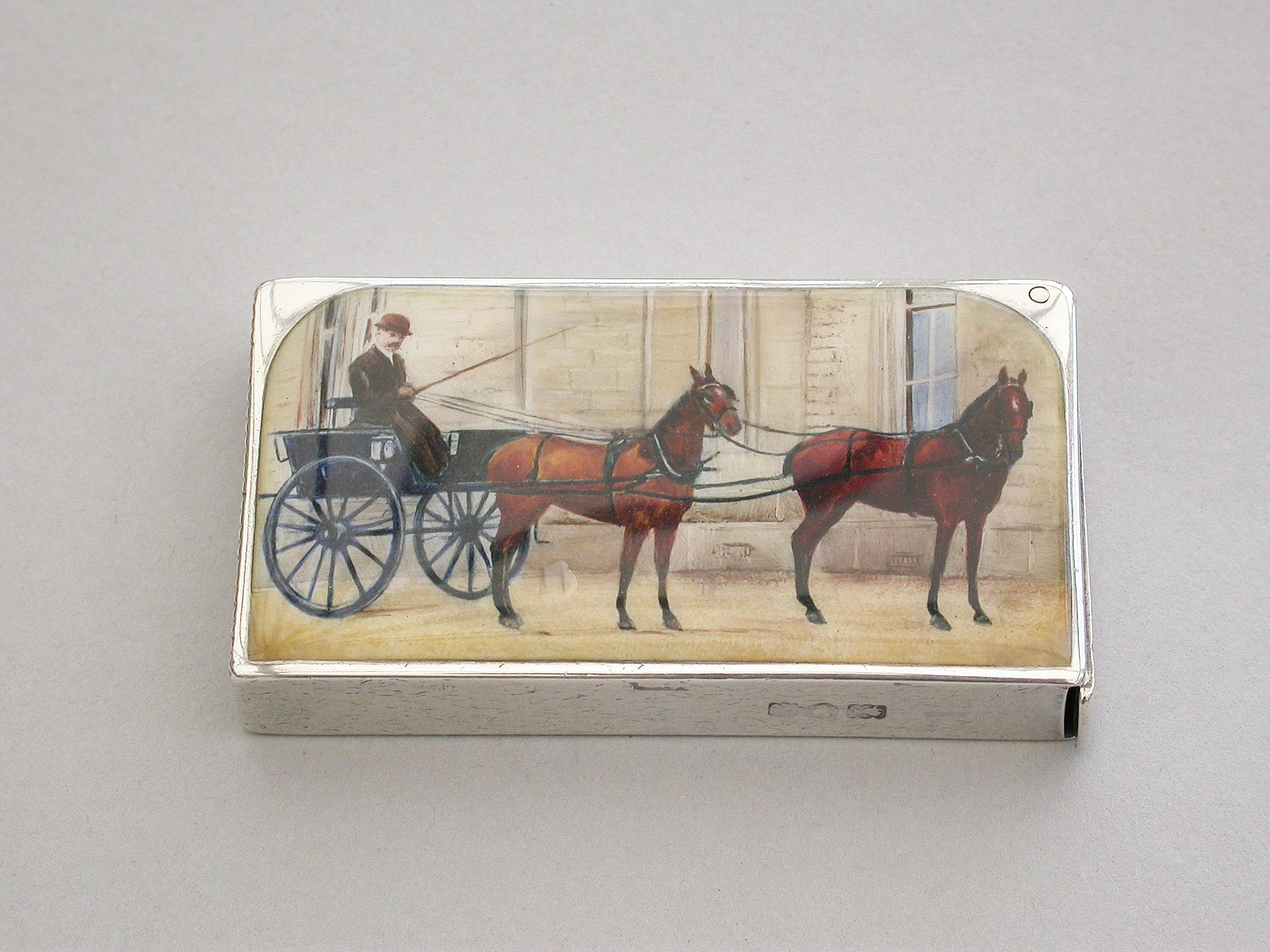
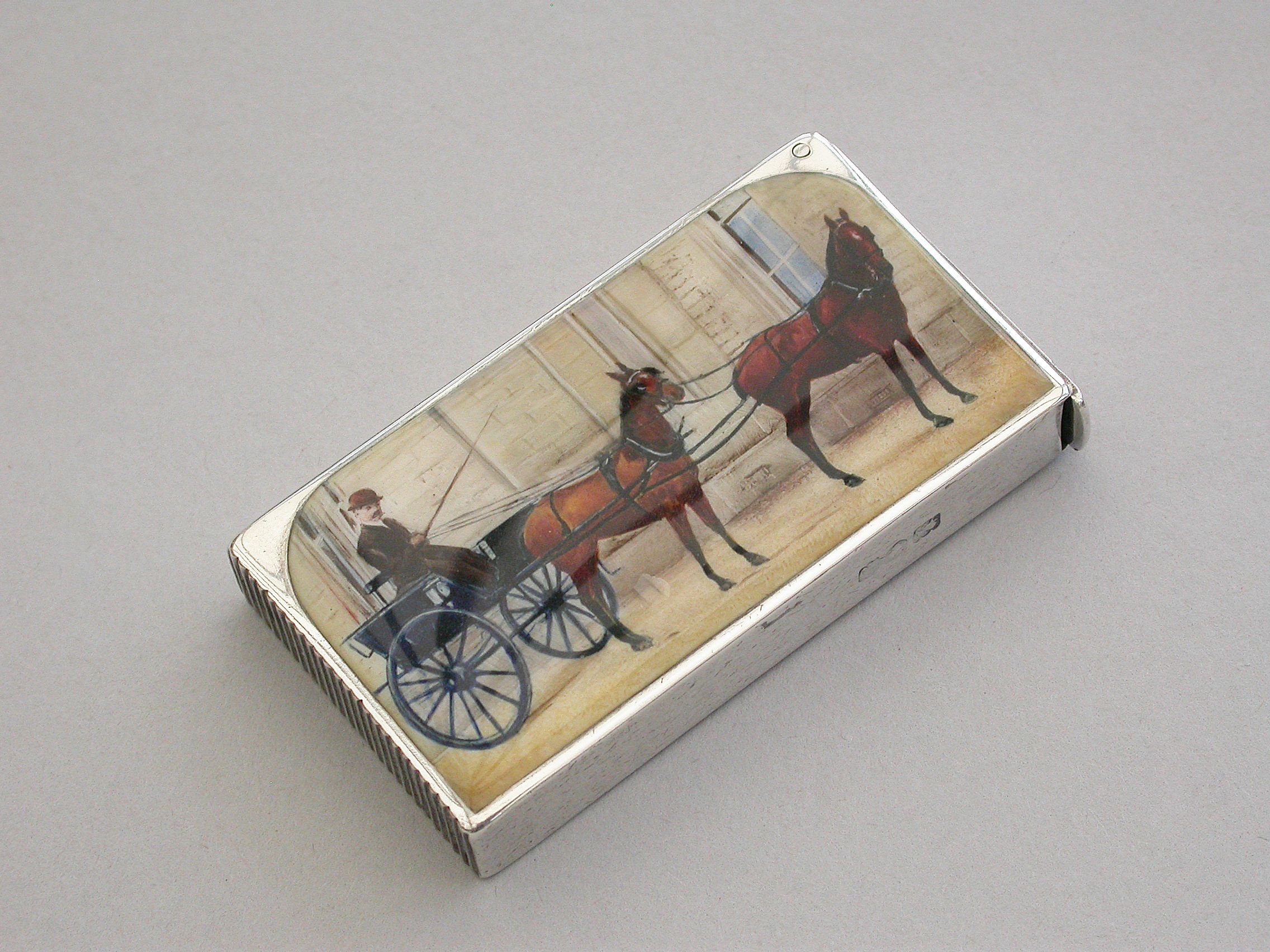
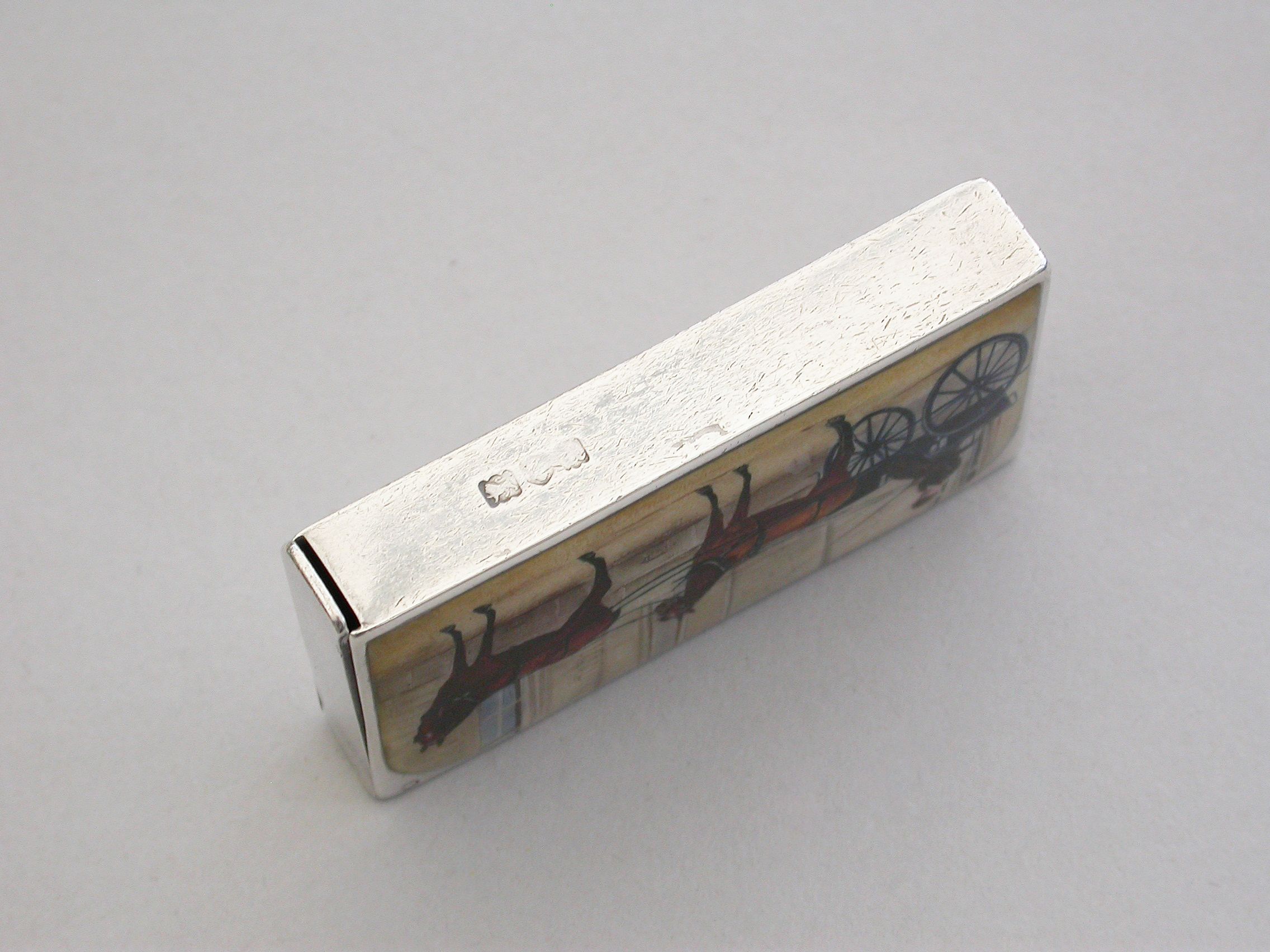
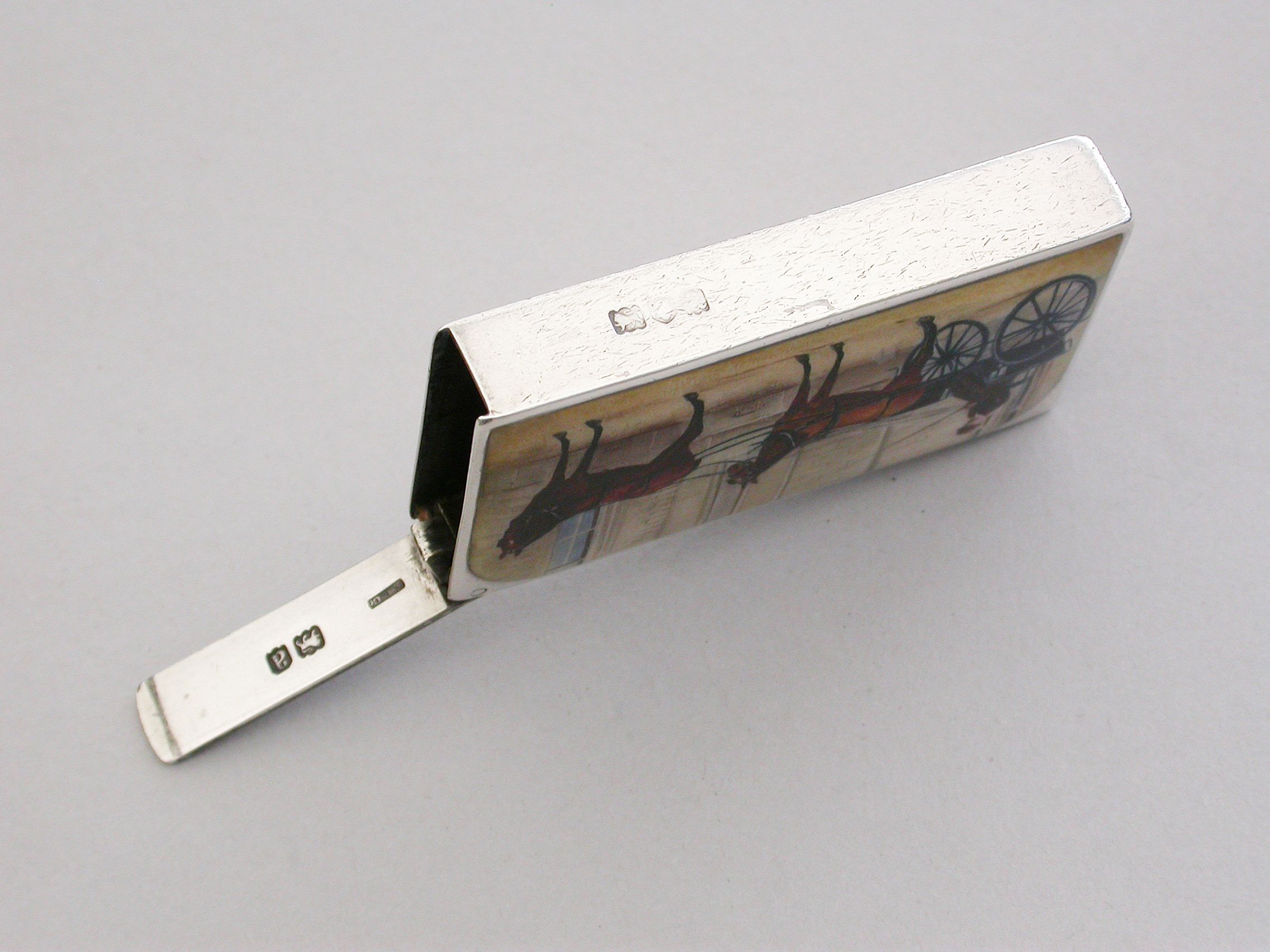
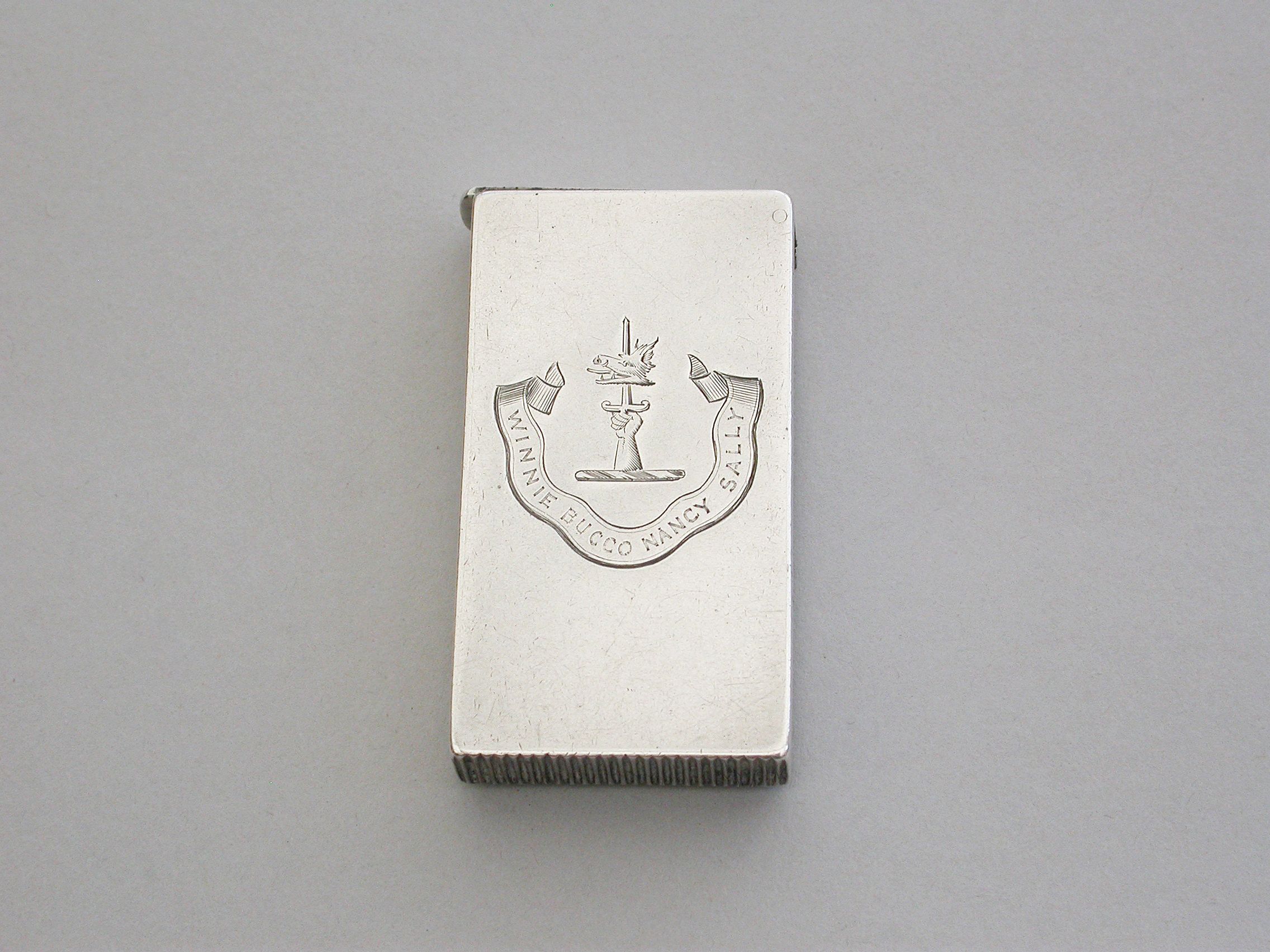
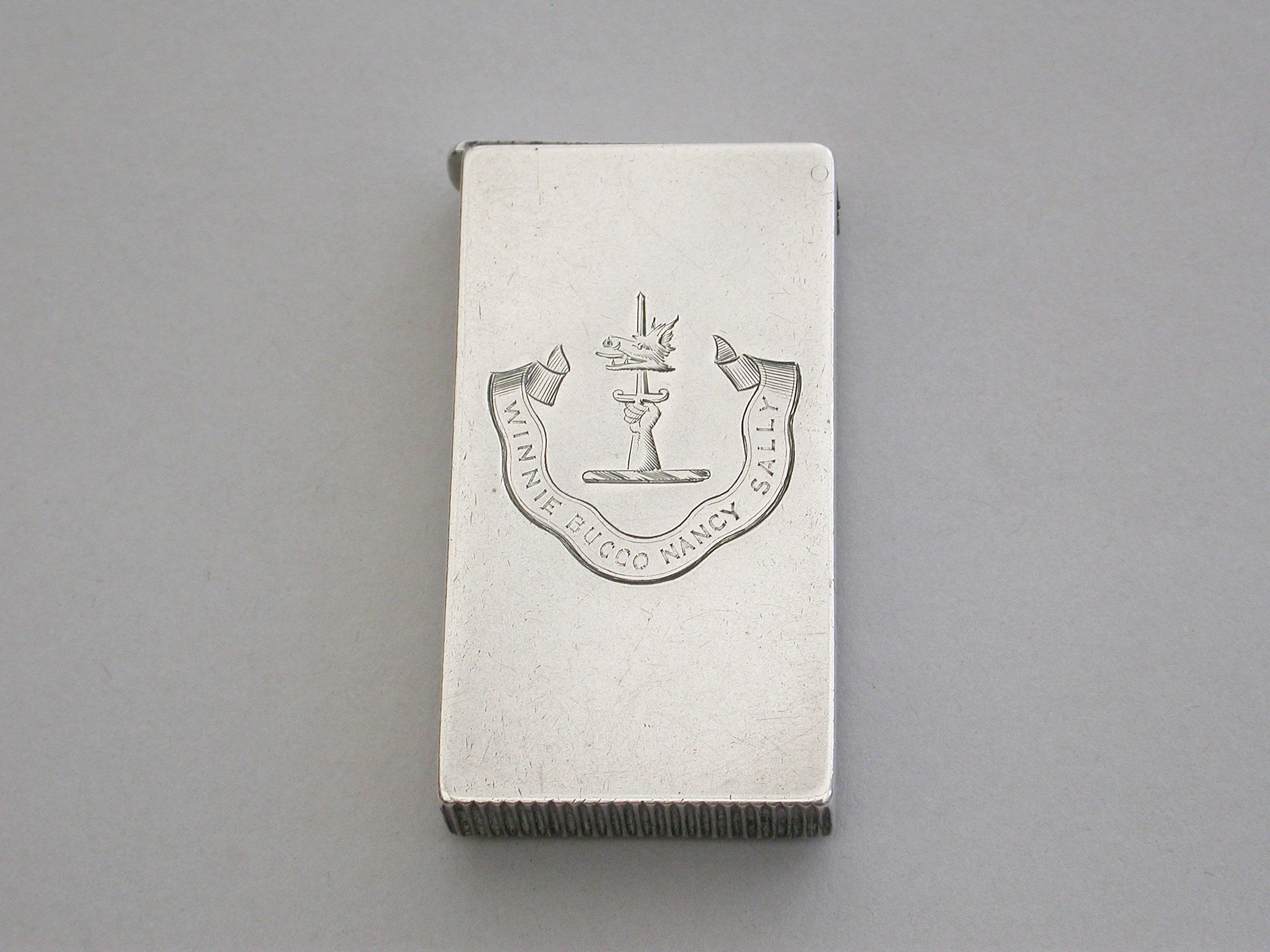
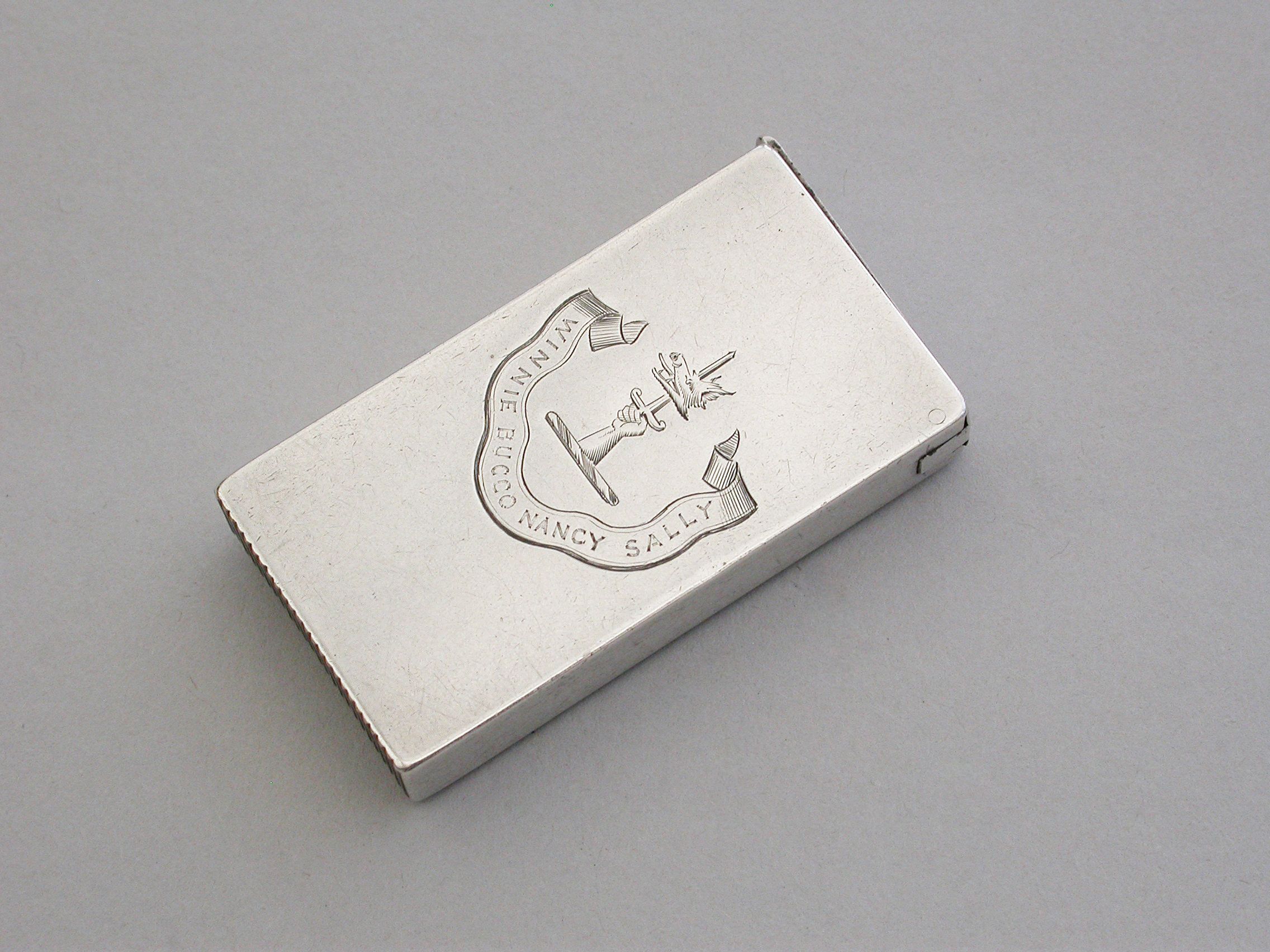
A fine and rare Victorian silver Vesta Case of rectangular flat-top form, the face enamelled with a Curricle (a two-wheeled carriage drawn by two horses), the reverse engraved with an armorial crest of a dexter hand holding a dagger erect ppr., on the point a boar's head couped (that of several families) and the motto Winnie Bucco Nancy Sally on a banner.
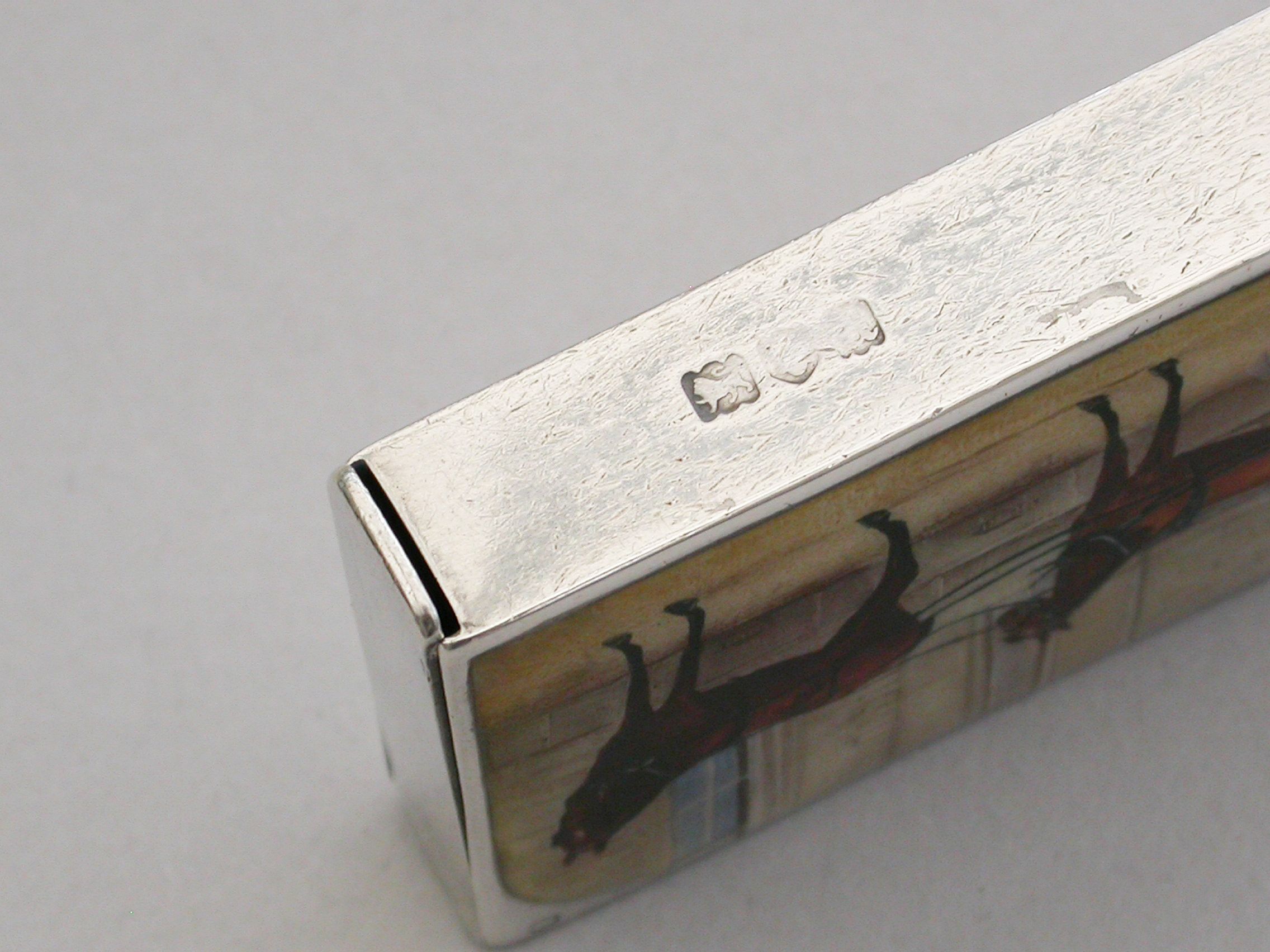
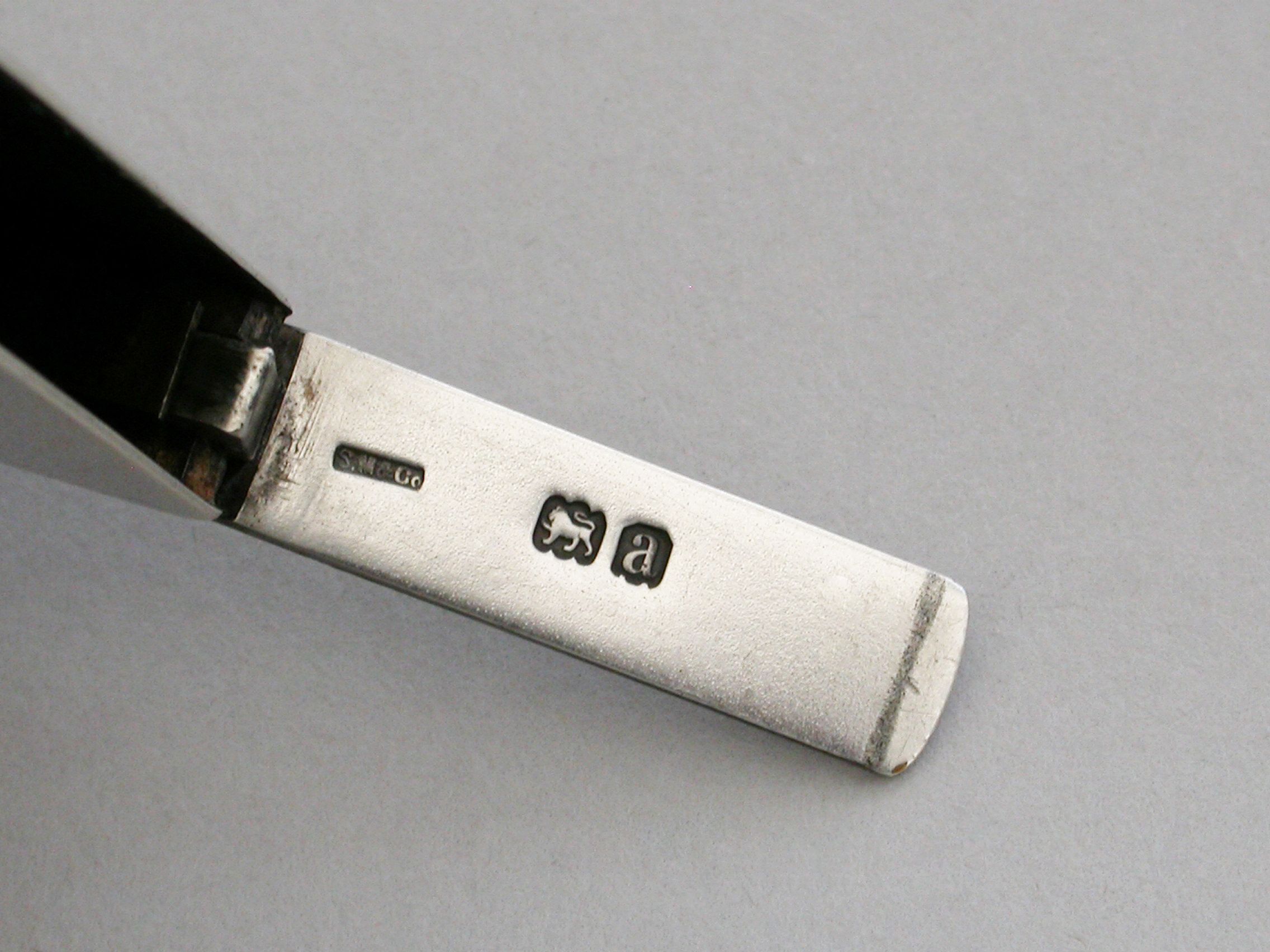
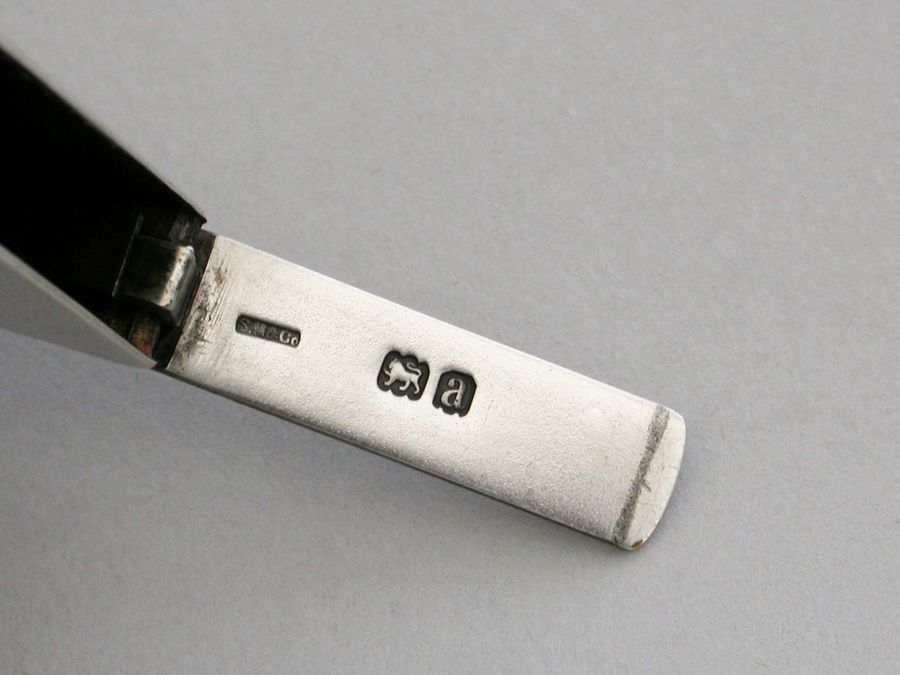
By Sampson Mordan & Co, London 1896.
The curricle was invented in the last quarter of the 18th century in Italy and came to England in the early 1800s by way of France. The word curricle comes from curriculum, the name of the Roman racing chariot. In Latin, the word curriculum means "running", "racecourse" or "chariot".
Accidents with curricles were common. The ratio of draft—one lightweight carriage compared to two horses pulling—was so low that curricles were often driven faster than they should, leading to collisions or accidents when a horse slipped. The danger, plus the development of the safer phaeton and cabriolet, replaced curricles as the fashionable carriage of the time.
Sold - £1,750.00